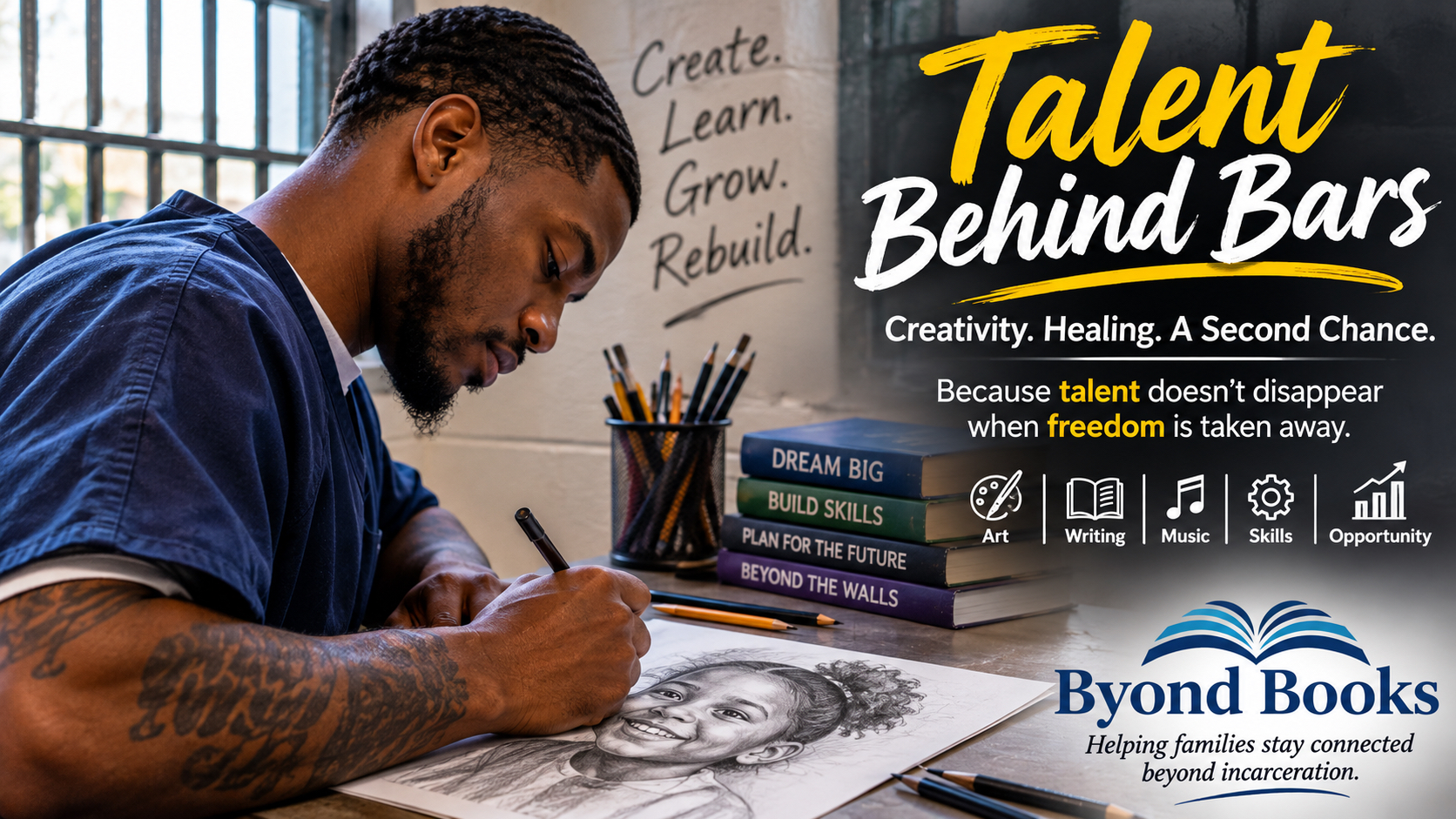
Talent Behind Bars

Talent Behind Bars: Turning Creativity Into Healing, Purpose, and Second Chances
Because talent doesn’t disappear when freedom is taken away.
When we think about prison, we often think about confinement, punishment, and the loss of freedom. But what about the talent that exists behind those walls?
Inside correctional facilities across the country are gifted artists, talented writers, musicians, poets, skilled craftsmen, aspiring entrepreneurs, and individuals with extraordinary creative abilities.
Some discovered their talents long before incarceration. Others discovered abilities they never knew they possessed while serving their sentences.
Yet many of these talents remain unseen, unheard, and unexplored.
What if we started looking at incarcerated individuals not only through the lens of their past mistakes, but also through the potential they still possess?
At Byond Books LLC, we believe every individual has a story, and that story doesn’t end with incarceration.
More Than a Prison Number: Recognizing the Talent Within
A prison identification number may be necessary for institutional purposes, but it does not define a person’s entire identity.
Behind that number may be someone who can paint a breathtaking portrait, write a powerful novel, create original music, design clothing, develop a business concept, or teach others a valuable skill.
Some individuals use limited resources to create remarkable work. Others spend years developing their craft through practice, discipline, and determination.
These abilities deserve recognition.
Recognizing talent does not mean overlooking accountability. It means acknowledging that people are capable of personal growth, meaningful contributions, and change.
Creativity as an Emotional Outlet
Incarceration can involve isolation, grief, frustration, anxiety, and prolonged separation from loved ones.
For some individuals, creative expression provides a constructive way to process these emotions.
Art and drawing can allow someone to communicate feelings that may be difficult to express verbally.
Writing and poetry can provide opportunities for reflection, storytelling, accountability, and emotional release.
Music and songwriting can offer a way to explore personal experiences, relationships, and hopes for the future.
Craftsmanship and design can encourage concentration, patience, and a sense of accomplishment.
Research into arts-based correctional programming suggests that participation may support emotional expression, self-esteem, and engagement, although outcomes vary and creative activities should not be considered substitutes for professional mental health treatment.
For many people, creating something meaningful can be a reminder that their identity extends beyond their circumstances.
From Hidden Talent to Visible Opportunity
One of the greatest challenges for incarcerated creators is finding appropriate ways to share their work with the outside world.
A person may spend years writing a manuscript, developing artwork, composing music, or creating business plans without knowing how to introduce those talents to a larger audience.
Families, community organizations, educators, and approved programs can help bridge that gap.
Here are several possibilities:
1. Publishing Written Work
Incarcerated writers may explore opportunities to publish poetry collections, memoirs, educational materials, fiction, or personal development books.
Families can help research publishing requirements, organize manuscripts, and identify legitimate publishing opportunities.
Before submitting work, everyone involved should review facility policies, copyright ownership, and any restrictions on business activities or compensation.
2. Showcasing Artwork
Drawings, paintings, portraits, and other approved artwork may be shared through community exhibitions, nonprofit initiatives, publications, or digital galleries.
With the artist’s permission and appropriate institutional approval, family members may be able to help present their work to a broader audience.
Artwork should always be credited to its creator.
3. Sharing Poetry and Spoken Word
Poetry provides a powerful platform for storytelling.
Approved poetry submissions, literary publications, community readings, and family-supported creative projects can help incarcerated poets reach audiences beyond prison walls.
Where recordings are not permitted, written poetry may offer another avenue for sharing creative expression.
4. Developing Business and Career Skills
Creative talent can also become a foundation for future employment.
Someone skilled in drawing may explore graphic design. A talented writer may pursue editing, publishing, or content creation. Someone interested in clothing design may begin studying entrepreneurship and product development.
Even when incarcerated individuals cannot operate a business, they may be able to use approved educational materials to research industries, develop portfolios, and prepare for opportunities after release.
5. Mentoring and Teaching Others
Talent becomes even more meaningful when it is shared.
Where correctional facilities permit peer-led activities, individuals with experience in writing, art, music, or vocational skills may help others develop their abilities.
Teaching can encourage patience, responsibility, communication, and leadership.
The Connection Between Creativity and Reentry
Preparing for release involves more than securing identification, housing, and employment.
It also involves rebuilding confidence, developing healthy routines, identifying personal strengths, and establishing a sense of direction.
Creative activities can contribute to this process.
A writer who completes a manuscript has practiced discipline and long-term planning.
An artist who develops a portfolio has created tangible examples of their abilities.
An aspiring entrepreneur who studies business fundamentals may return home with a clearer understanding of their goals.
These accomplishments do not guarantee employment or successful reentry. However, they can become valuable starting points for education, career exploration, and personal development.
The goal is not simply to discover what someone is good at. It is to help them understand how that ability can become part of a productive future.
How Families Can Help Support Talent Behind Bars
Families often play an important role in encouraging creative development.
Support can begin with simple conversations.
Ask your loved one what they enjoy creating. Encourage them to continue learning and practicing. Help them identify legitimate opportunities to develop their skills.
When permitted, families may also help preserve manuscripts, organize artwork, research publishing options, or connect with community programs.
Before sharing someone’s creative work publicly, obtain their permission and discuss how they want their name, story, and work presented.
Not every incarcerated individual wants public recognition, and that decision deserves respect.
Families should also verify facility rules before sending art supplies, educational materials, or other resources.
Why Showcasing These Talents Matters
Public conversations about incarceration often focus on criminal histories, institutional conditions, and the challenges of returning home.
Those conversations matter.
But there is another conversation worth having.
What happens when we recognize that incarcerated individuals can also be authors, artists, innovators, and future business owners?
What happens when we provide constructive opportunities for individuals to develop their skills and prepare for meaningful contributions after release?
Recognizing talent does not erase the past. It creates room for growth, responsibility, and a future that is not defined exclusively by previous decisions.
A Vision Beyond the Walls
At Byond Books LLC, our mission is rooted in connection, education, and the belief that individuals should have opportunities to develop their own narratives.
BYOND stands for Be Your Own Narrative Dream.
That philosophy extends beyond maintaining family relationships. It also means recognizing the stories, abilities, ambitions, and potential that exist within people.
Through educational publications, reentry resources, and family connection services, we hope to encourage personal growth and meaningful preparation for life beyond incarceration.
We also believe there is value in creating conversations about how incarcerated writers, artists, and other talented individuals can share their work responsibly and develop opportunities for the future.
Because talent should not be forgotten simply because someone is incarcerated.
Your Talent Is Still Yours
To anyone reading this from behind prison walls: Your circumstances may limit your opportunities, but they do not erase your abilities.
Keep writing. Keep drawing. Keep learning. Keep developing your skills.
Your creativity may help you express emotions, discover purpose, or prepare for the next chapter of your life.
And to the families supporting someone behind bars: Never underestimate the impact of encouraging a loved one’s talents.
Sometimes, helping someone recognize what they are capable of is the beginning of helping them imagine a different future.
Your past is part of your story. It does not have to be the final chapter.
Byond Books LLC — Helping families stay connected beyond incarceration.


Comments